
Top 10 Best Inventory Management Software in India for 2026
Summary: Compare the top 10 best inventory management software in India for 2026. Explore pricing, GST/VAT compliance, and real-time cloud stock tracking for SMEs.
Automate Store Invoicing & GST with BillEase Cloud POS
Eliminate thermal paper expenses with instant WhatsApp receipts, print GST-ready invoices in 1.4s, and collect direct UPI payments at 0% fee on mobile and desktop.
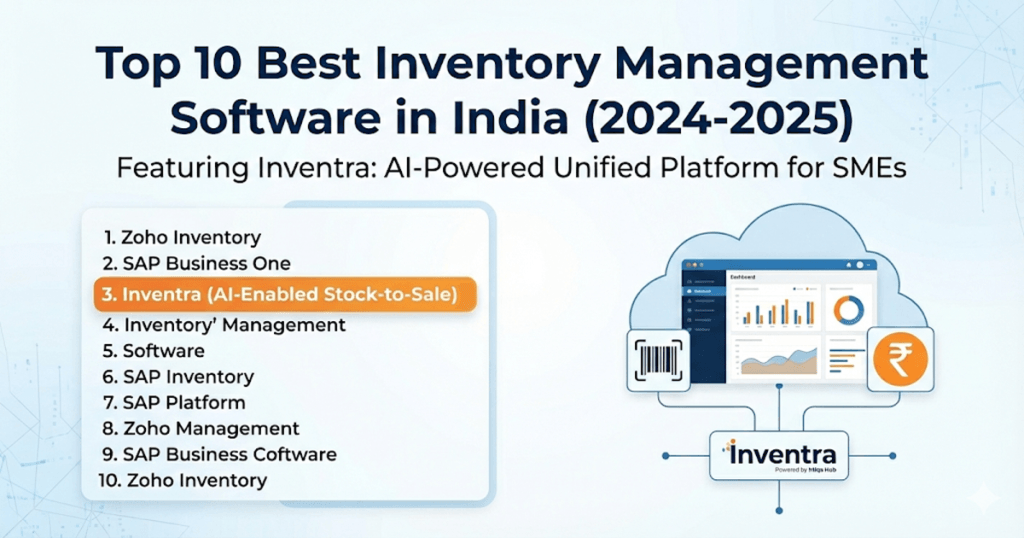
Top 10 Best Inventory Management Software in India for 2026
In the dynamic and price-sensitive Indian market, effective inventory management is the dividing line between profitability and chaos. For retailers, wholesalers, and D2C brands, stock is money. Holding too much leads to dead stock and cash flow crunches; holding too little results in lost sales and damaged reputation.
As we enter 2026, the reliance on manual spreadsheets and legacy desktop software is fading. The modern Indian business demands cloud-based inventory management systems that offer real-time visibility, seamless GST billing integration, and omnichannel synchronization. According to recent market data, the adoption of SaaS-based inventory tools in India is growing at a CAGR of 12%, driven by the digitization of SMEs.
However, with dozens of options flooding the market-from heavy ERPs like SAP to lightweight apps-how do you choose? To help you navigate this decision, we have curated a comprehensive list of the top 10 inventory management software in India. We analyzed these tools based on ease of use, GST compliance, cost-effectiveness, and automation capabilities.
Quick Comparison: Best Inventory Software for 2026
Before diving into the detailed reviews, here is a quick snapshot of the top contenders and who they are best suited for.
| Rank | Software | Best For | Key Advantage |
|---|---|---|---|
| 1 | Unicommerce | Large Enterprises | Warehouse Management (WMS) |
| 2 | Zoho Inventory | Zoho Users | Ecosystem Integration |
| 3 | Inventra | SMEs & Retailers | Unified Billing & Inventory |
| 4 | Odoo Inventory | Tech-Savvy Teams | Open Source Customization |
| 5 | SAP Business One | Global Corps | Full ERP Suite |
| 6 | Sortly | Asset Managers | Mobile Scanning |
| 7 | Easyecom | E-commerce Sellers | Payment Reconciliation |
| 8 | Browntape | Marketplace Sellers | Centralized Dashboard |
| 9 | Increff | Fashion Brands | Merchandising Analytics |
| 10 | Fishbowl | Manufacturers | QuickBooks Integration |
Detailed Analysis of Top Inventory Tools
We have tested and analyzed these platforms to understand their strengths and weaknesses in the context of the Indian market.
1. Unicommerce
Unicommerce is a dominant force in the Indian e-commerce technology space. It is widely regarded as the go-to solution for large D2C brands and marketplace aggregators. Its primary strength lies in its Warehouse Management System (WMS) capabilities, which allow businesses to manage complex logistics, bin locations, and shelf life.
For businesses processing thousands of orders a day across Flipkart, Amazon, Myntra, and Shopify, Unicommerce provides the stability required. Its "Uniware" platform automates the allocation of stock to orders based on the nearest warehouse, reducing shipping costs and time.
Verdict: Best for large-scale e-commerce operations.
2. Zoho Inventory
Part of the extensive Zoho suite, Zoho Inventory is a cloud-based application that excels in simplicity and integration. It is designed for small to medium-sized businesses (SMEs) that need a clean interface to track stock. Its biggest selling point is its native integration with Zoho Books (accounting) and Zoho CRM.
Zoho allows for item kitting (bundling products), setting up reorder points, and tracking shipments. It is a fantastic entry-level tool for businesses that are already invested in the Zoho ecosystem.
Verdict: Best for startups and Zoho ecosystem users.
Top Pick for SMEs
3. Inventra
While enterprise tools focus on warehouses, Inventra has carved a niche by solving the biggest headache for Indian SMEs: Unifying Inventory with Billing. Most small businesses struggle because their billing software doesn't talk to their inventory sheet. Inventra solves this by offering a "Stock-to-Sale" platform.
Inventra is designed for the modern Indian retailer and wholesaler. It allows you to generate GST-compliant invoices that automatically deduct stock from your inventory in real-time. Beyond tracking, it uses AI to act as a smart assistant, analyzing your sales velocity to suggest exactly what to reorder and when.
Why is it ranked so high? Because it eliminates the need for multiple software subscriptions. You get Purchase Order management, Inventory tracking, and Billing in one dashboard.
👨💼 Expert Take: If you are a growing business looking to move away from spreadsheets but don't want the complexity of an ERP, Inventra is the perfect middle ground. It is intuitive, powerful, and affordable.
Start Free Trial with Inventra →
4. Odoo Inventory
Odoo is a unique player in this list because it is open-source. Its inventory module uses a "double-entry" system, similar to accounting. Every stock move is a transaction-from supplier to warehouse, or warehouse to customer. This ensures complete traceability.
Odoo is modular, meaning you can start with just inventory and add modules for Manufacturing (MRP), Sales, or Accounting later. However, getting the most out of Odoo often requires a technical implementation partner.
Verdict: Best for tech-savvy businesses needing customization.
5. SAP Business One
For established enterprises and large manufacturing units, SAP Business One is the industry standard. It goes far beyond simple inventory tracking to offer a comprehensive Enterprise Resource Planning (ERP) suite. It connects production planning, procurement, finance, and HR.
While incredibly powerful, SAP requires a significant upfront investment and a long implementation period. It is designed for businesses where process compliance is more critical than agility.
Verdict: Best for large corporations with complex supply chains.
6. Sortly
Sortly takes a "visual" approach to inventory. It is a mobile-first application that relies on photos and QR codes. Unlike the others on this list, Sortly is not ideal for high-volume retail sales. Instead, it is perfect for asset tracking.
IT companies tracking laptops, event management companies tracking equipment, or construction firms tracking tools will find Sortly much easier to use than a standard retail inventory system.
Verdict: Best for internal asset and equipment tracking.
7. Easyecom
Easyecom is a specialized tool for e-commerce sellers that focuses heavily on the financial side of operations: Reconciliation. Selling on marketplaces like Amazon and Flipkart involves complex deductions for commissions, shipping, and returns.
Easyecom automates the reconciliation of these payments against your inventory, ensuring you know your true profit margins. It also offers robust multi-channel inventory syncing.
Verdict: Best for e-commerce sellers focused on profit reconciliation.
8. Browntape
Browntape is an aggregator that simplifies multi-channel selling. It pulls all your orders from Amazon, Flipkart, Myntra, and your own website into one single dashboard. It is known for its user-friendly interface and cost-effectiveness for early-stage sellers.
While it lacks the deep WMS features of Unicommerce, it is an excellent starting point for sellers who are just expanding to their second or third marketplace.
Verdict: Best for new multi-channel sellers.
9. Increff
Increff is a technology partner for the fashion and lifestyle industry. Fashion inventory is notoriously difficult to manage due to variants in size, color, and style. Increff uses serialization (tracking every single item uniquely) to achieve near-100% accuracy.
It also offers merchandising analytics, helping brands decide which designs to discount and which to restock based on regional demand.
Verdict: Best for Fashion and Apparel brands.
10. Fishbowl
Fishbowl Inventory is the #1 inventory solution for QuickBooks users. Many manufacturers use QuickBooks for accounting but find it lacks production features. Fishbowl plugs this gap by adding Bill of Materials (BOM), work orders, and barcode scanning.
If your manufacturing business runs on QuickBooks, Fishbowl is the natural upgrade path before moving to a full ERP like SAP.
Verdict: Best for manufacturers using QuickBooks.
Expert Buying Guide: Choosing the Right Tool in 2026
Selecting inventory software is a long-term commitment. To ensure you rank high in efficiency, consider these critical factors before subscribing.
1. The "Stock-to-Bill" Connection
One of the most common mistakes SMEs make is buying inventory software that doesn't talk to their billing system. This leads to double entry-once in the bill, once in the stock sheet. Look for Unified Platforms like Inventra where the invoice _is_ the stock deduction. This saves hours of manual work every week.
2. GST Compliance is Non-Negotiable
Foreign software often struggles with the nuances of Indian GST (HSN codes, intrastate vs. interstate tax). Ensure your chosen software is GST-ready and can generate reports (like GSTR-1) to simplify your tax filing.
3. Cloud vs. On-Premise
In 2026, Cloud (SaaS) is the standard. It allows you to check stock from your mobile, work from home, and ensures your data is backed up automatically. Avoid legacy desktop software that ties you to a single office computer.
Frequently Asked Questions (FAQs)
What is the best inventory management software for small businesses in India?
For small businesses that need affordability and GST compliance, Inventra and Zoho Inventory are the top recommendations. Inventra is particularly strong for retailers and wholesalers needing integrated billing.
Can I manage inventory for free?
Some tools offer free tiers for very small volumes (e.g., Zoho Inventory's free plan). However, as you scale, investing in a paid tool like Inventra pays for itself by preventing stockouts and reducing theft/loss.
How does AI help in inventory management?
AI helps by analyzing your past sales data to predict future demand. Tools like Inventra use this to give you Reorder Alerts, telling you exactly when to buy more stock so you never miss a sale.
Ready to streamline your business?
Stop letting spreadsheets slow you down. Experience the power of unified stock and billing.
Recommended Free Business Tools & Calculators
Recent Deep Dive Strategy Guides
- Managing Matrimonial Profiles Without Spreadsheets: Why Excel Fails Growing Marriage Bureaus (and What to Use Instead)
- How Modern Muslim Marriage Bureaus Scale: The Definitive Guide to Matrimonial SaaS, AI Biodatas, and 0% Commission Payments
- Best Free GST Billing Software: What Free Tools Offer & When to Upgrade
- Which Billing Software is Best for Small Businesses? 2026 Selection Guide
- What Are the Types of Invoices in GST? Tax Invoice vs Bill of Supply